
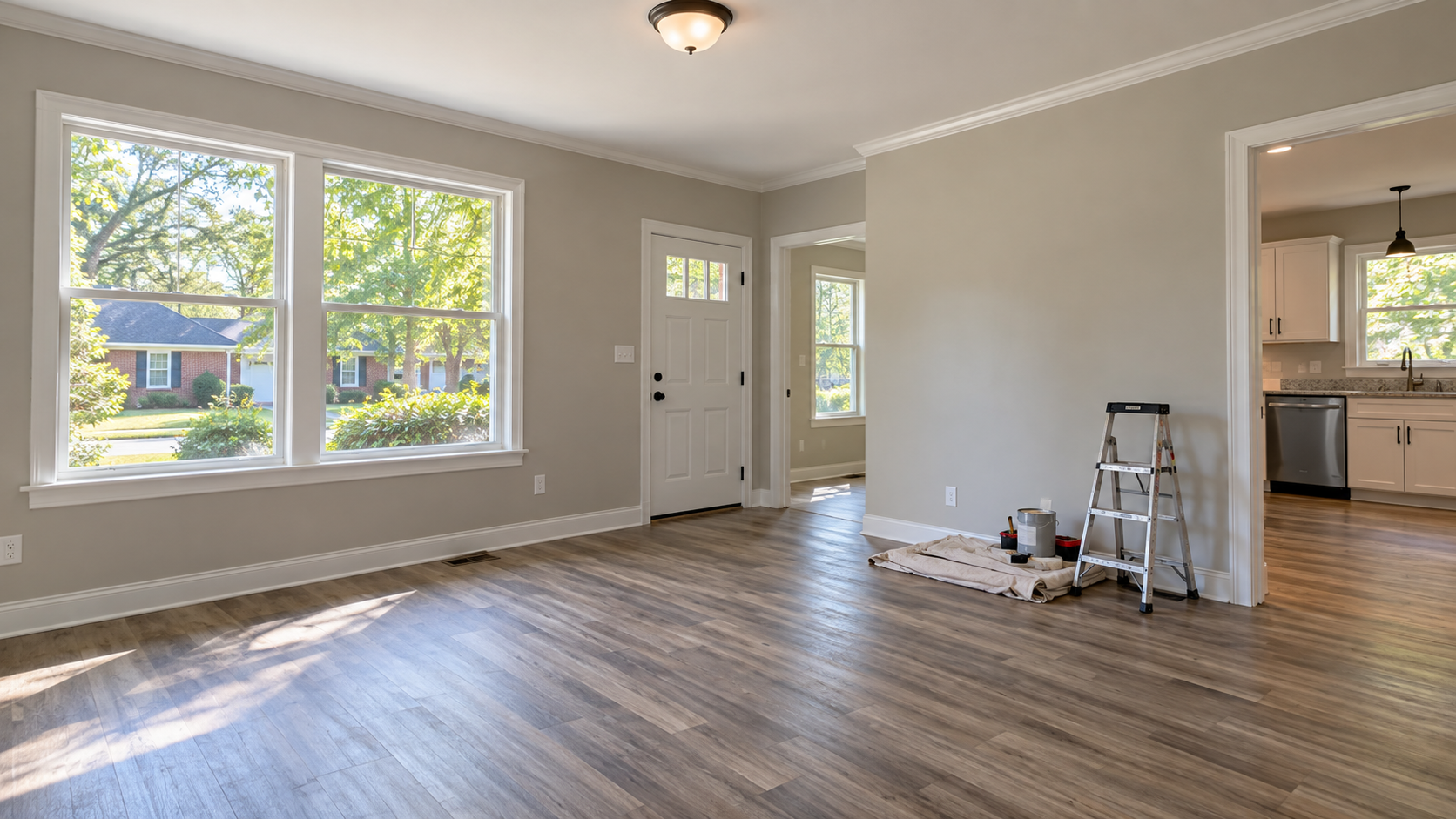
A successful rental turnover starts before the next listing goes live. For a Fayetteville owner, the practical sequence is to document the home after possession is returned, separate necessary repairs from optional upgrades, schedule the make-ready work, verify the finished condition, and then market the property at a current rental price. Handle the former tenant’s security deposit on its own statutory timeline; a contractor’s schedule does not stop that clock.
Here is a checklist you can use whether you manage the home yourself or work with a property manager.
1. Confirm possession and document the move-out condition
Once the tenant has returned possession, record the date, collect the keys and access devices, and walk the property. Take dated photos or video of every room, appliance, exterior area, and item needing attention. Compare what you find with the move-in record and any later inspection reports.
Document the condition before cleaning or repairs change the evidence. Note missing items, damaged surfaces, appliance problems, odors, leaks, and exterior issues. A written scope with photos also gives vendors and the owner a clearer starting point.
2. Separate property work from potential tenant charges
A turnover budget and a security deposit claim are different decisions. The owner may choose to repaint, replace worn flooring, or update fixtures to improve the next listing. That does not automatically make those costs chargeable to the former tenant.
North Carolina law does not allow a landlord to withhold a deposit for normal wear and tear or retain more than actual damages. Compare the move-in and move-out evidence, the age and prior condition of the item, the cause of the problem, and the supported repair cost before proposing a deduction. The North Carolina Real Estate Commission also cautions against charging routine cleaning, painting, or carpet cleaning to a tenant; unusual damage or extraordinary cleaning requires documentation.
Keep the deposit deadline visible while work is underway. North Carolina generally requires a written itemization and any remaining refund within 30 days after the tenancy ends and possession is delivered. If the extent of a claim cannot be determined within that period, the statute calls for an interim accounting within 30 days and a final accounting within 60 days.
3. Put safety and essential repairs first
Before considering cosmetic improvements, check the items that affect whether the home is ready for another tenancy:
- Plumbing leaks, drainage, toilets, tubs, and showers
- Electrical issues, lighting, and supplied appliances
- Heating, ventilation, and air conditioning
- Doors, windows, locks, steps, and flooring
- Smoke alarms and, where required, carbon monoxide alarms
- Signs of moisture, pests, or structural damage
North Carolina requires landlords to put and keep rental premises in a fit and habitable condition and maintain specified facilities supplied by the landlord. The statute also requires smoke alarms to be operable at the beginning of each tenancy. Carbon monoxide alarm requirements apply to rental units with a fossil-fuel-burning heater, appliance, or fireplace, or an attached garage. Check the property’s actual equipment and applicable requirements during the make-ready review.
A fresh coat of paint cannot compensate for an unresolved leak or a door that will not lock. Address those issues before photos, showings, or a new move-in date.
4. Build one make-ready scope and schedule
Turn the inspection findings into a single work list. For each item, specify the location, the work requested, who will do it, whether an owner decision is needed, and when it must be finished. This makes it easier to coordinate related work and spot a task that could hold up the whole turnover.
A useful order is:
- Investigate leaks, damage, and safety concerns.
- Complete repairs that may disturb walls, floors, or fixtures.
- Paint or perform approved upgrades.
- Deep-clean the home, appliances, and accessible fixtures.
- Finish landscaping and exterior presentation.
- Verify repairs and cleaning before photography or move-in.
Some work can overlap. Cleaning immediately before a dusty flooring repair, however, usually means paying for cleaning twice. Keep utilities available as needed for testing systems and completing vendor work.
5. Decide which improvements earn their place in the budget
Turnover is an opportunity to improve the property, but every upgrade should have a purpose. Ask whether it solves a recurring maintenance issue, materially improves the condition shown in listing photos, or supports the rent the local market can bear.
For example, replacing damaged flooring may be necessary. Replacing serviceable flooring solely to chase a higher rent calls for a comparison of cost, likely rent, and expected ownership period. Keep that decision separate from repairs required to make the home ready.
Once you know the finished condition, revisit pricing. EPMG’s guide to setting the right rent price explains why current comparable rentals and vacancy costs matter more than a target based on the owner’s mortgage payment.
6. Verify the home before relisting and again before move-in
Do a final walk-through after vendors report completion. Test what can be tested, photograph the finished work, and check that cleaning reached cabinets, appliances, bathrooms, windows, and outdoor areas. Confirm keys and access arrangements.
Then prepare accurate listing photos and a description that reflects the home as it will be delivered. If a material repair remains open, resolve its timeline before promising a move-in date. A final move-in condition record establishes a useful baseline for the new tenancy.
For owners near Fort Bragg and throughout Fayetteville, the same discipline applies regardless of who the next renter will be: present the property’s actual condition clearly, screen applicants consistently, and deliver the home that was advertised.
Frequently asked questions
Should I list my rental before all turnover work is complete?
You can plan marketing while work is underway, but use an accurate description and a realistic availability date. Finish work that changes the home’s condition or appearance before relying on final listing photos or committing to a move-in.
Can I use the security deposit to pay for the entire turnover?
No. The deposit is subject to North Carolina’s rules on permitted claims, actual damages, normal wear and tear, itemization, and timing. An owner’s preferred upgrades and routine preparation for the next renter should be budgeted separately.
What usually delays a turnover?
The most preventable delays come from discovering major repairs late, waiting on owner decisions, scheduling vendors in the wrong order, or relisting before the home’s completion date is credible. A documented inspection and one coordinated scope make those dependencies easier to manage.
Get a turnover plan for your Fayetteville rental
If your tenant is moving out, contact Expert Property Management Group to discuss the property’s condition, make-ready priorities, rental pricing, and next listing. Learn more about our Fayetteville property management services.
This article provides general educational information, not legal advice about a specific tenancy or deposit claim.