
Most security deposit disputes in North Carolina don't start with a tenant trying to cheat a landlord, or a landlord trying to cheat a tenant. They start with an owner who didn't know the rules until the moveout inspection, which is a bad time to learn them.
Here is the short answer. Under North Carolina's Tenant Security Deposit Act, you can hold no more than two weeks' rent on a week-to-week tenancy, one and one-half months' rent on a month-to-month tenancy, and two months' rent on a lease longer than month-to-month. The deposit has to sit in a trust account or be covered by a bond. After the tenancy ends, you have 30 days to refund it or send the tenant a written, itemized list of what you deducted. This article walks through those rules and the practical steps behind them, with the Clayton and Johnston County owner in mind.
This is general educational information, not legal advice. Statutes can change and individual situations vary, so talk with a North Carolina attorney about a specific dispute.
How much security deposit can a North Carolina landlord charge?
The cap in G.S. 42-51(b) depends on the type of tenancy:
- Week-to-week: up to two weeks' rent
- Month-to-month: up to one and one-half months' rent
- Lease term longer than month-to-month: up to two months' rent
Most single-family and townhome leases in Clayton, Garner and Smithfield are 12-month leases, so the two-month ceiling is the one that usually applies. That is a ceiling, not a target. Many owners set the deposit at one month's rent, which is easier for qualified applicants to say yes to and helps reduce vacancy days.
If you charge a deposit above the legal limit, you invite a dispute you may not win. Check the amount on your lease before you list the property.
Where does the deposit have to be held?
G.S. 42-50 requires security deposits to be held in one of two ways. The first is a trust account at a licensed and federally insured depository institution. The second is a bond from an insurer that is licensed to do business in North Carolina. A deposit may be held outside the state only if it is covered by a bond.
Two practical points trip up new landlords:
- Keep deposits separate from your own money. A deposit sitting in your personal checking account, mixed with your mortgage payments and groceries, is not a trust account.
- Tell the tenant where it is. The statute requires you to notify the tenant of the depository's name and address, or the bond information, within 30 days after the lease begins. Put it in writing and keep a copy.
This is one of the first places DIY landlords fall short, and one reason owners with a few rentals move to professional management. A management company runs deposits through a dedicated trust account with a ledger for every tenant. That part is not optional for us.
What can you deduct from a security deposit?
G.S. 42-51(a) lists the permitted uses. In plain language, a deposit can cover:
- Unpaid rent and unpaid utilities
- Damage to the property beyond normal wear and tear, including damage the tenant is responsible for
- Costs from early termination of the lease, with certain exceptions
- Unpaid bills that become a lien against the property because of the tenant's occupancy
- Costs of re-renting, where the lease allows it
- Costs of removing and storing the tenant's property after an eviction
- Court costs
- Certain fees authorized under G.S. 42-46
Normal wear and tear versus damage
The statute is direct on this point: under G.S. 42-52, a landlord may not withhold part of the deposit for conditions caused by normal wear and tear. That is where most owner/tenant fights land.
In practice, it tends to break down like this:
- Generally wear and tear: minor scuffs on walls, light carpet wear in walking paths, faded paint, small nail holes from hanging pictures
- Generally damage: large holes in drywall, pet-stained or burned carpet, broken blinds, missing smoke detector batteries removed on purpose, unauthorized paint colors, trash left behind
These examples are not a legal list, and a dispute turns on the facts. What protects you is documentation. A dated, photographed move-in condition report beats memory every time.
When do you have to return the deposit?
G.S. 42-52 gives you 30 days from the end of the tenancy to do one of two things: refund the deposit, or mail or deliver to the tenant a written, itemized statement of any damage and what you are keeping, along with the refund of whatever is left.
If you can't determine the full cost of your claim within 30 days, the statute allows an interim accounting by day 30 and a final accounting within 60 days of the end of the tenancy. Owners often miss that the interim accounting is itself a deadline. If a repair quote isn't in by day 30, you still have to send the tenant something in writing.
A few habits keep owners on the right side of the calendar:
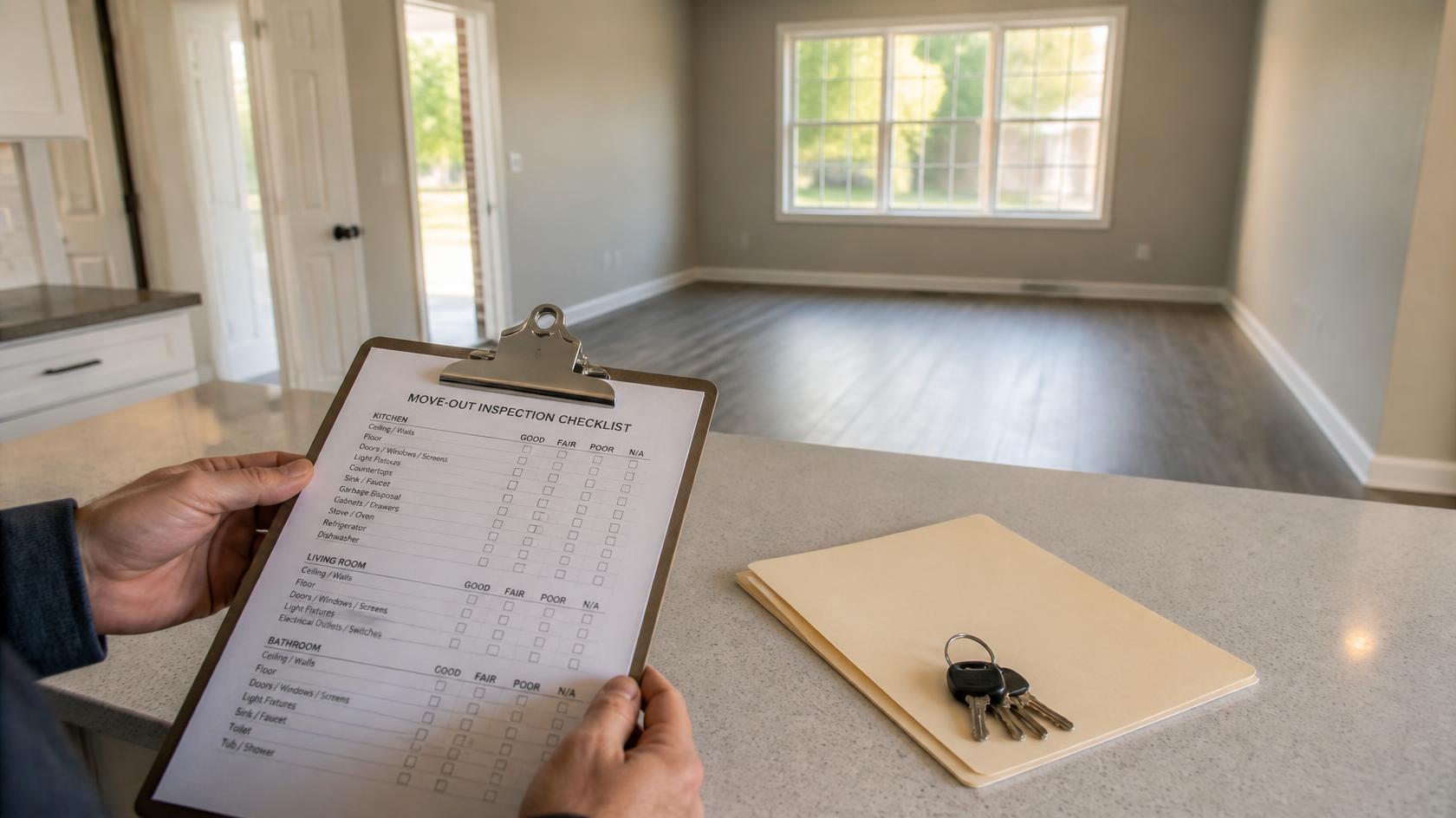
- Start the move-out inspection the day keys are returned, not a week later.
- Get repair estimates within a few days and keep the invoices.
- Calendar the 30-day deadline at the moment the tenancy ends.
- Itemize every deduction with the actual amount, and never keep more than your actual costs.
For a full move-out workflow, see our rental property turnover checklist for Fayetteville owners. The steps apply just as well to a turnover in Clayton.
What about pet deposits and pet fees?
G.S. 42-53 allows a landlord to charge a reasonable, nonrefundable fee for pets the tenant keeps on the property. The key words are "reasonable" and "nonrefundable." Because the statute describes this as a fee, label it clearly in your lease as a pet fee rather than as part of the refundable deposit. If you are unsure how to treat pet charges in your own lease, have an attorney review the wording.
What happens to the deposit if you sell the rental?
If you sell or otherwise transfer the property while a tenant is living there, G.S. 42-54 requires you to transfer the remaining deposit to the new owner, or return it to the tenant, within 30 days of the transfer. Buyers who are acquiring a tenant-occupied rental in Johnston County should ask for the deposit ledger as part of closing. Sellers should account for it too, so a deposit doesn't become a problem after the sale.
What are the consequences of getting it wrong?
Under G.S. 42-55, a landlord who willfully fails to comply with the Act can lose the right to retain any part of the deposit, and may be liable for the tenant's attorney's fees. In other words, a missed deadline or a sloppy accounting can turn a $400 carpet claim into a loss of the whole deposit plus legal costs.
A practical system for owners
The rules are manageable when there is a repeatable process behind them. At minimum:
- At lease signing: use a deposit amount within the statutory limit, deposit the funds into a trust account, and send the tenant the required written notice of where it is held.
- At move-in: complete a detailed, photographed condition report and have the tenant sign it.
- During the tenancy: use periodic inspections to catch damage early so it is not first discovered at move-out.
- At move-out: inspect promptly, compare against the move-in report, and get written estimates.
- Within 30 days: send the refund, or the itemized statement, or the interim accounting.
If this sounds like a lot to run alongside a job and a family, that is the work our team handles every day through our tenant screening, accounting and maintenance systems. Good screening matters too. A better-qualified tenant is less likely to leave a damage claim in the first place.
Frequently Asked Questions
Is there a legal maximum security deposit in North Carolina?
Yes. G.S. 42-51(b) caps it at two weeks' rent for week-to-week tenancies, one and one-half months' rent for month-to-month tenancies, and two months' rent for terms longer than month-to-month.
How long does a landlord have to return a security deposit in NC?
Within 30 days after the tenancy ends, the landlord must refund the deposit or send an itemized written statement of deductions. If the full claim can't be determined by then, an interim accounting is due at 30 days and a final accounting within 60 days.
Can I charge a nonrefundable pet fee in North Carolina?
G.S. 42-53 allows a reasonable, nonrefundable fee for pets. Label it clearly in the lease as a pet fee, separate from the refundable security deposit.
Do I have to keep security deposits in a separate account?
North Carolina requires deposits to be held in a trust account at a licensed, federally insured institution or backed by a bond. Mixing deposits with personal funds does not meet that requirement.
Can I deduct for normal wear and tear?
No. G.S. 42-52 says a landlord may not withhold part of the deposit for conditions due to normal wear and tear. Deductions have to relate to actual damage or other losses permitted by G.S. 42-51.
What happens to the deposit if I sell my rental house?
Within 30 days after the transfer, the deposit must be handed to the new owner or returned to the tenant under G.S. 42-54.
Not sure your deposit process would hold up?
If you own a rental in Clayton or elsewhere in Johnston, Wake, Harnett or Cumberland County and you want a second set of eyes on your lease terms, deposit handling or move-out process, talk with the Expert Property Management Group team or call 919.275.0488. We can walk you through how we handle deposits and inspections, and explain what our management pricing covers, so you can decide whether professional management fits your property.