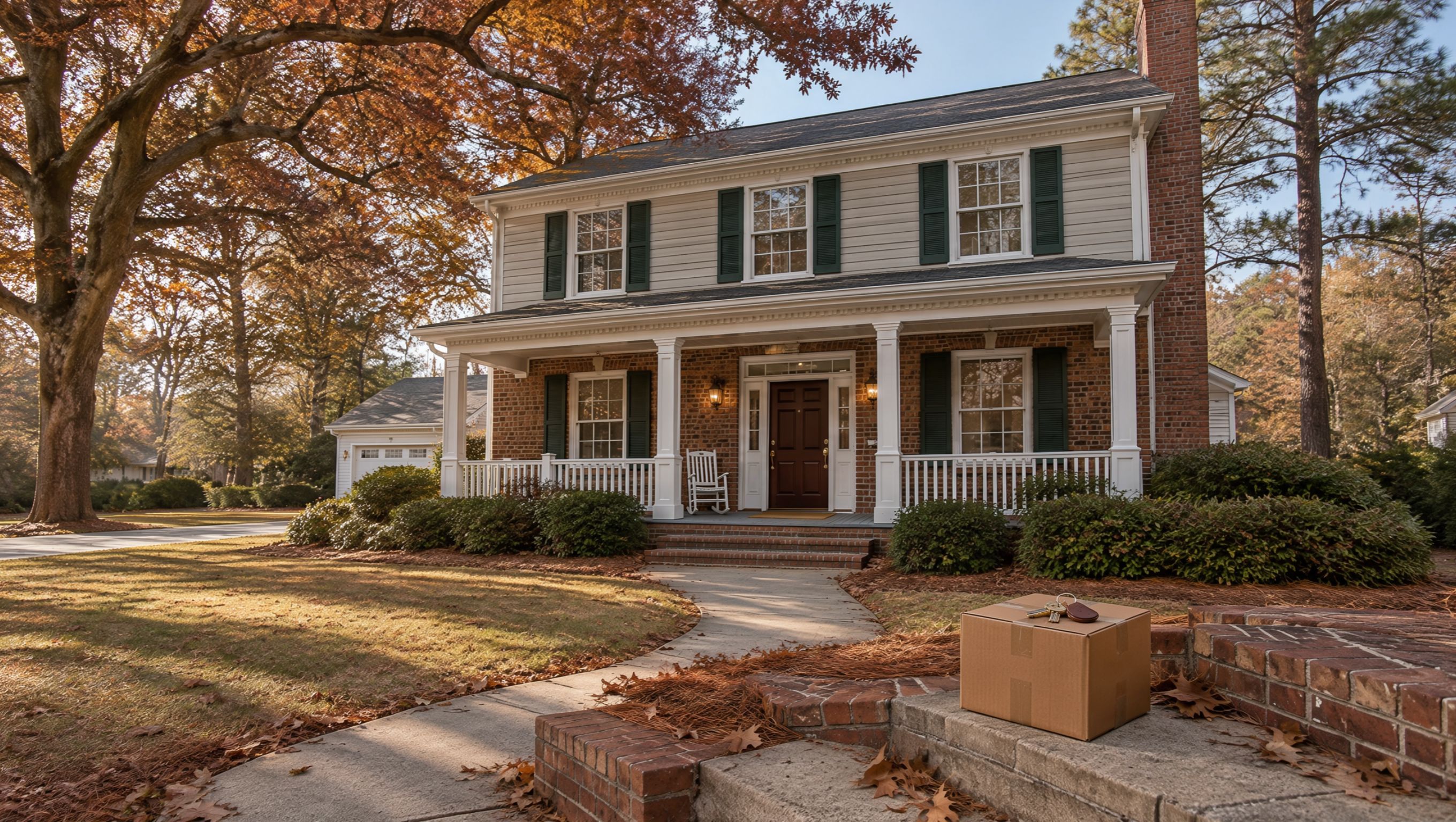
If you’re moving and your Raleigh home isn’t selling the way you hoped, or you just don’t want to give up a low mortgage rate, renting it out can be a smart move. It can also become an expensive one if you skip the homework.
The short answer: renting out your home instead of selling can work well if:
- the rent covers your full monthly cost of ownership with room to spare;
- you understand how the move affects your capital gains exclusion;
- your mortgage and insurance are set up correctly for a rental;
- you’re ready to meet North Carolina’s landlord obligations from day one.
If any of those is uncertain, sort it out before you hand over keys.
Below is the checklist we walk through with Raleigh-area homeowners who are becoming landlords for the first time. Most of them never planned to.
Why Raleigh Homeowners End Up Renting Instead of Selling
Most accidental landlords in Wake County fall into a few groups:
- Job relocations. Someone takes a job out of state or across the country and doesn’t want to sell under pressure.
- Move-up buyers. Someone buys a larger home in Raleigh, Garner or Johnston County and keeps the first one.
- Rate holders. Owners whose current mortgage rate is far below today’s rates, and who see the loan itself as an asset worth keeping.
- Stalled listings. Homes that sat longer than expected and now need a backup plan.
Each of these can be a good reason to rent. None of them, alone, makes renting the right financial decision. The numbers have to work.
Step 1: Run the Real Numbers, Not Just Rent Minus Mortgage
The most common mistake we see is comparing expected rent to the mortgage payment and calling the difference profit. Your real monthly cost of owning a rental includes much more.
Costs to include
- Principal, interest, property taxes and insurance (insurance will usually change; see Step 4)
- HOA dues, if any
- A monthly reserve for repairs and maintenance
- A reserve for capital items: roof, HVAC, water heater, appliances, flooring
- Vacancy between tenants (see our Vacancy Loss Calculator)
- Turnover costs such as paint, cleaning and repairs between residents
- Lawn care, if you won’t make the tenant responsible
- Property management fees, if you won’t manage the home yourself
- Utilities you’ll keep in your name, if any
A simple illustration
The figures below are hypothetical, for illustration only. Say a home rents for $2,100 a month and the mortgage payment with taxes and insurance is $1,750. That looks like $350 a month of cash flow.
Now set aside a modest amount each month for repairs, capital items and vacancy, plus a management fee. The real margin can shrink to almost nothing, or go negative in a year with a big HVAC repair.
That doesn’t mean you shouldn’t rent. Some owners accept thin cash flow because the home is building equity or they expect to come back to the area. The point is to make that choice on purpose.
Expert Property Management Group’s Rent vs. Sell Calculator is a good starting point for comparing the two paths side by side. The rent number you plug in should come from current local data, not from what a neighbor says they’re getting. Our guide on how to set the right rent price explains how we build a rent recommendation from comparable rentals.
Step 2: Understand the Tax Clock Before You Move Out
This is the issue that most often catches Raleigh homeowners off guard. It can be worth tens of thousands of dollars.
The capital gains exclusion and the “2 out of 5” rule
Under IRS rules, if you owned your home and used it as your residence for at least 24 months of the 5 years before the sale, you may be able to exclude up to $250,000 of gain from your income, or up to $500,000 for a married couple filing jointly. Those 24 months don’t have to be continuous.
What this means for accidental landlords: once you move out and start renting, a clock starts running. If you lived in the home for at least two years, you generally have a window of up to about three years after moving out to sell and still meet the residence test. Rent the home longer than that and you may lose the exclusion on the eventual sale.
That doesn’t mean you have to sell by then. If your long-term plan is to hold the property as an investment, it may not matter. But you should know your date.
Depreciation follows you
Once the home is a rental, it’s depreciated as residential rental property, generally over 27.5 years. Your starting basis for depreciation is the lower of your adjusted basis or the home’s fair market value when you convert it to rental use.
Depreciation lowers your taxable rental income while you own the property. The trade-off is that gain equal to depreciation after May 6, 1997 can’t be excluded under the home-sale exclusion, even if you otherwise qualify. That portion is generally taxed when you sell.
Talk to a CPA first
This is general educational information, not tax advice. Your situation depends on your dates, your basis, your income and your long-term plans. A short conversation with a CPA before you sign a lease is one of the best-value meetings a new landlord can have.
Step 3: Check Your Mortgage Terms
Most owner-occupied mortgages include an occupancy requirement. For example, Fannie Mae’s guidelines define a principal residence as one the borrower moves into within 60 days of closing and continues to occupy for at least one year, unless the loan documents allow otherwise.
If you’ve lived in the home well past that point and your plans have genuinely changed, converting to a rental is common. Still:
- Read your deed of trust and loan documents, or ask your loan servicer, if you’re unsure.
- Be careful if you’re within your first year of ownership.
- Know that refinancing later as an investment property generally comes with different terms than an owner-occupied loan.
Step 4: Switch to the Right Insurance
A standard homeowners policy is written for a home you live in. Once a tenant moves in, you generally need a landlord or dwelling policy. These typically cover the structure and your liability as a landlord, and often lost rental income after a covered loss, but not the tenant’s belongings.
Before your first tenant moves in:
- Call your insurance agent and tell them the home is becoming a rental.
- Ask about liability limits and whether an umbrella policy makes sense.
- Consider requiring tenants to carry renters insurance in your lease.
Don’t skip this step. A claim on a rental filed under a homeowners policy can be denied.
Step 5: Check Your HOA Rules
Many neighborhoods across Raleigh and Wake County have HOAs. Some declarations restrict leasing: minimum lease terms, limits on the number of rentals in the community, registration requirements, or tenant-notice rules.
Pull your HOA declaration and rules before you advertise. Finding a rental restriction after a tenant has signed is a problem you don’t want.
Step 6: Get the Home Ready to Meet North Carolina’s Landlord Requirements
North Carolina’s Residential Rental Agreements Act (N.C.G.S. § 42-42) sets duties every landlord must meet. A tenant accepting the home “as is” doesn’t waive them. Among them:
- Fit and habitable. Make repairs and do whatever is necessary to keep the home fit and habitable, and comply with applicable building and housing codes.
- Systems in working order. Maintain electrical, plumbing, sanitary, heating, ventilating and air-conditioning systems and appliances you supply in good and safe working order, and promptly repair them.
- Smoke alarms. Provide operable smoke alarms, confirm they work at the start of each tenancy, and repair or replace them within 15 days of written notice. Replacement alarms generally must be tamper-resistant, 10-year lithium-battery units, with some exceptions.
- Carbon monoxide alarms. If the home has a fossil-fuel-burning heater, appliance or fireplace, or an attached garage, provide at least one operable CO alarm per level.
- Imminently dangerous conditions. Fix these within a reasonable time. The statute’s list includes unsafe wiring, roofs, flooring or steps, lack of potable water, and lack of heat that can warm living areas to 65°F when it’s 20°F outside from November 1 through March 31.
That last item matters right now. If you’re converting your home this winter, have the heating system serviced before move-in.
Treat it like a business, not your house
Your home was set up for your family. A rental needs durable finishes, documented condition and systems that hold up. Before listing, we typically recommend:
- A full move-in inspection with dated photos and video
- Servicing HVAC and checking the water heater, roof and plumbing
- Removing personal items, including anything left in the attic, garage or shed
- Rekeying or replacing locks
- Keeping copies of appliance manuals and warranty information
Thorough documentation now protects you at move-out. See our rental property turnover checklist for how this plays out between residents.
Step 7: Know the Legal Basics of Leasing in North Carolina
First-time landlords most often run into trouble in three areas:
Fair housing. Federal and North Carolina fair housing laws prohibit discrimination in advertising, screening and lease terms. Your screening criteria should be written, applied the same way to every applicant, and based on legitimate factors. Our guide to tenant screening criteria for North Carolina landlords covers what to check and what the law allows.
Security deposits. North Carolina caps deposits at 1½ months’ rent for month-to-month tenancies and 2 months’ rent for terms longer than month-to-month. The deposit must be held in a trust account at an insured bank or savings institution in North Carolina, or you must post a bond. You must account for it within 30 days after the tenancy ends and the tenant returns possession, and you can’t charge for normal wear and tear. Our North Carolina security deposit rules article goes into detail.
Evictions. If a tenancy goes wrong, North Carolina requires a court process. Self-help, like changing the locks or cutting utilities, isn’t allowed. Our step-by-step guide on how to evict a tenant in North Carolina explains the process.
This section is general information, not legal advice. For questions about a specific situation, talk with a North Carolina attorney.
Step 8: Decide Who Will Manage It
This is where many accidental landlords underestimate the job, especially if they’re moving out of the area. Managing a rental means:
- Marketing the home and handling showings
- Screening applicants consistently and lawfully
- Writing a North Carolina-compliant lease
- Collecting rent and enforcing late fees
- Answering maintenance calls, including at 2 a.m.
- Coordinating licensed vendors
- Doing inspections and keeping records
- Handling renewals and rent adjustments (see our guide to lease renewals)
- Year-end accounting for your taxes
If you live nearby, have time and are comfortable with the legal side, self-managing can work. If you’re relocating, have a demanding job, or want the home treated as a real investment, professional management usually pays for itself through fewer vacancy days, better tenant selection and fewer costly mistakes. If you’re weighing options, our article on how to compare property management companies lays out the questions to ask any manager, including us.
Frequently Asked Questions
Is it better to rent or sell my house in Raleigh?
It depends on your cash flow after all costs, how long you plan to hold the property, your tax situation, and whether you want to be a landlord. Renting tends to make the most sense when rent covers your full cost of ownership with a reserve, and you have a long-term reason to keep the home. Selling may make more sense if the margins are thin, the home needs major work, or you’d lose a large capital gains exclusion by holding it too long.
How long can I rent out my house and still avoid capital gains tax?
Under IRS rules, you generally need to have owned the home and lived in it for at least 24 months during the 5 years before the sale to use the home-sale exclusion. If you lived there at least two years, that typically leaves a window of up to about three years after moving out. Depreciation taken while the home is rented generally can’t be excluded. Confirm your dates with a CPA.
Do I need a different insurance policy to rent out my home?
Usually, yes. A standard homeowners policy is designed for owner-occupied homes. Contact your agent about a landlord or dwelling policy before a tenant moves in.
Do I have to put a tenant’s security deposit in a separate account in North Carolina?
Yes. North Carolina requires landlords to hold tenant security deposits in a trust account at an insured bank or savings institution in the state, or to furnish a bond, and to tell the tenant where the deposit is held.
Can I rent out my home if I’m moving out of state?
Yes, and many Raleigh-area owners do. The practical challenge is handling showings, maintenance emergencies, inspections and tenant issues from a distance. Most out-of-state owners hire a local property manager for exactly this reason.
Find Out What Your Raleigh Home Would Rent For
The rent-or-sell decision starts with a realistic rent number and an honest look at the costs. That’s exactly what we help Raleigh-area homeowners work through.
Expert Property Management Group manages single-family rentals across Raleigh, Garner, Clayton, Smithfield, Fayetteville and the surrounding Central and Eastern North Carolina communities. If you’re deciding whether to keep your home as a rental, contact our team for a rental analysis. We’ll show you what the home is likely to rent for, what it will take to get it rent-ready, and how our Raleigh property management service would handle the rest. Then you can decide with real numbers in front of you.