
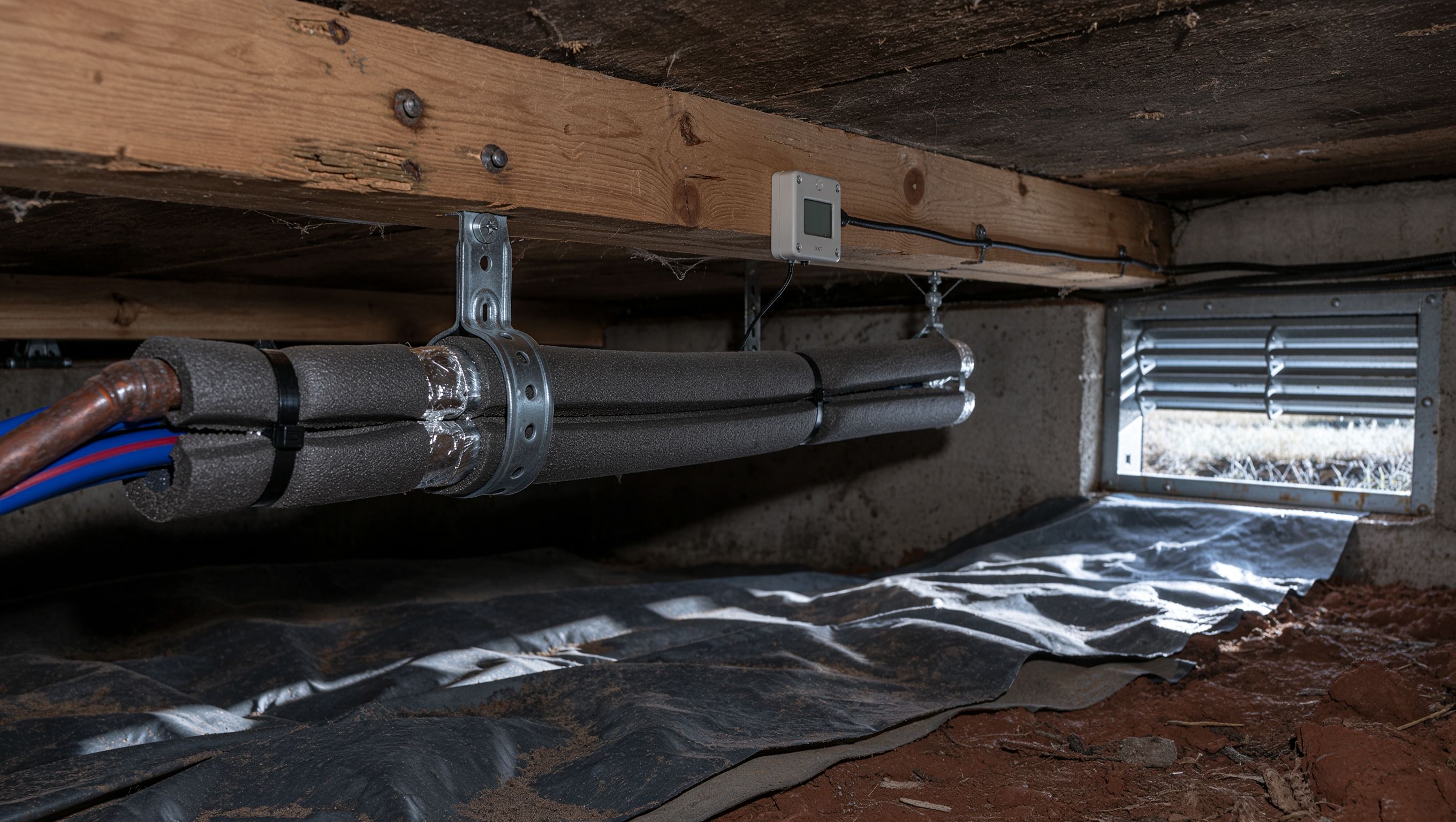
A frozen pipe is one of the most expensive problems a rental owner can face in a single night, and it rarely announces itself. A supply line in a crawl space splits during a hard freeze. Nothing happens until temperatures climb back above freezing. Then water runs under the floor until a tenant notices a soft spot, a musty smell, or an unusually high water bill. In a vacant rental, it can run for days before anyone knows.
The short answer: preventing frozen pipes in a rental property comes down to four things. Protect vulnerable plumbing before the first hard freeze, make sure the heating system can keep the home at a safe temperature, set clear winter expectations with tenants in writing, and have a separate plan for any home that will sit vacant. North Carolina law also puts specific heating and plumbing obligations on landlords during the cold months, so winter preparation is a compliance issue as well as a maintenance one.
This guide walks Smithfield and Johnston County rental owners through all four, plus what to do in the first 24 hours if a pipe does burst.
Why Smithfield Rental Owners Can't Treat Winter as an Afterthought
Central North Carolina winters are mild most days, and that's exactly why owners get caught off guard. Homes here aren't always built or maintained with hard freezes in mind. Water lines often run through crawl spaces, exterior walls, and unheated garages, and many owners never think about them until something fails.
Hard freezes do happen here. In January 2025, the National Weather Service recorded a low of 16°F at Raleigh-Durham International Airport and 15°F in Fayetteville. Both locations logged 22 days that month with lows at or below freezing. In late January 2026, Johnston County declared a local State of Emergency, and on February 1 county Emergency Services reported significant snowfall across much of the county with wind chills as low as five below zero.
The U.S. Department of Energy notes that homes in southern states generally start having frozen-pipe problems when the temperature reaches about 20°F. That threshold is reached often enough in the Smithfield area that every rental owner should have a plan.
Many Smithfield-area rentals sit on crawl-space foundations, from older homes near downtown to ranch homes across the county. That makes the crawl space the first place to look.
What North Carolina Law Requires of Landlords in Winter
North Carolina's Residential Rental Agreements Act (Chapter 42, Article 5 of the General Statutes) is clear about the landlord's responsibilities for heat and plumbing. Here are the provisions that matter most in winter.
Heat is a specific legal requirement from November through March
Under N.C. Gen. Stat. § 42-42(a)(8), the list of "imminently dangerous conditions" includes a lack of operable heating facilities capable of heating living areas to 65°F when it's 20°F outside, from November 1 through March 31. Landlords must repair or remedy an imminently dangerous condition within a reasonable time, based on its severity, after they learn of it or receive notice.
In practice, a heating system that can't keep up during a cold snap is more than a comfort complaint. It's a legal problem, and it's also the main thing standing between your pipes and a freeze.
Plumbing and water problems are also on the list
The same statute requires landlords to maintain plumbing, heating, and other facilities in good and safe working order and to repair them promptly. Tenants are generally required to report needed repairs in writing, except in emergencies. The "imminently dangerous" list also includes a lack of potable water and excessive standing water or flooding caused by plumbing leaks. A burst pipe can create both conditions at once.
When the tenant is responsible for the damage
Owners often ask who pays for frozen pipes in a North Carolina rental. Under N.C. Gen. Stat. § 42-43, tenants must not deliberately or negligently damage the premises. They're responsible for damage inside the unit, with exceptions that include ordinary wear and tear and natural forces. Section 42-42(a)(8) also allows a landlord to recover the actual, reasonable cost of repairs that are the tenant's fault.
The key word is fault. If a tenant turned the heat off and left for two weeks in January, the facts may support a charge. If an uninsulated pipe on an exterior wall froze while the home was heated normally, that's usually the owner's cost. Clear lease terms, written winter instructions, and good documentation are what make the difference when it comes time to decide.
Two other points are worth knowing. Under § 42-42(b), a tenant accepting the landlord's failure to provide fit premises doesn't release the landlord from these duties. Under § 42-44(c), a tenant can't withhold rent on their own before a court decides they have the right to.
This section is general educational information, not legal advice. For a specific dispute, consult a North Carolina attorney.
Pre-Freeze Checklist for Occupied Rentals
Ideally, finish these steps before the first forecast in the low 20s. If you missed fall maintenance, it isn't too late.
- Locate and label the main water shutoff. Make sure it turns freely, tag it, and tell your tenant exactly where it is. A tenant who can shut off the water in two minutes can save you thousands of dollars.
- Insulate exposed pipes. Focus on supply lines in crawl spaces, unheated garages, attics, and along exterior walls. Foam pipe sleeves are inexpensive. Heat tape may make sense for problem runs if it's installed correctly.
- Check the crawl space itself. Look for missing vent covers, a damaged access door, gaps in foundation skirting on manufactured homes, and torn insulation under the floor. Cold air getting into the crawl space is the most common way pipes freeze.
- Protect outdoor spigots. Disconnect garden hoses, which trap water in the hose bib. Add insulated faucet covers, or consider frost-free hose bibs at the next plumbing visit.
- Service the heating system. Confirm it can hold temperature in real cold. If the home has a heat pump, make sure the auxiliary or emergency heat works. Our Fall Rental Property Maintenance Checklist covers HVAC service in more detail.
- Seal air leaks near plumbing. Gaps where pipes pass through exterior walls, under sinks, and around the water heater let cold air reach lines that would otherwise stay warm.
- Document the work. Date-stamped photos of insulation, vent covers, and HVAC service records are your evidence if a freeze claim or tenant dispute comes up later.
Set Tenant Expectations in Writing
Most frozen-pipe damage in occupied rentals happens when tenants don't know what's expected, not because they don't care. Put winter expectations in the lease and repeat them in a short notice before the first cold snap.
A practical winter notice usually covers:
- Keep the heat on at all times, including when traveling. Chubb, a property insurer, recommends keeping a vacant home at 55°F or higher. That's a sensible minimum to put in writing when a tenant will be away.
- Keep utilities in service. If the lease makes the tenant responsible for electricity or gas, a shutoff for nonpayment in January can freeze the plumbing.
- Open cabinet doors under sinks on exterior walls during hard freezes so warm air can reach the pipes.
- Let a faucet drip on the coldest nights if the home has a known problem line.
- Report leaks, no water pressure, or no heat immediately through your emergency maintenance line, not by text the next morning.
- Tell you before extended travel so someone can check on the home.
Lease terms help you assign responsibility. They don't replace the landlord's duty to keep the heating system and plumbing in working order under § 42-42.
Vacant Rentals Need a Different Plan
A vacant home in January is the highest-risk situation a rental owner faces. Nobody is there to notice a problem, the heat may be set low or turned off, and a leak can run for days. This often happens during a winter turnover, a renovation, or while the home sits on the market between tenants.
You have three reasonable options, and the best approach often combines them:
Keep the heat on and the utilities in your name. Set the thermostat to a safe minimum. Chubb's guidance for vacant homes is 55°F or higher. This keeps the home ready to show and avoids the cost of draining and refilling the system.
Winterize the plumbing. If the home will sit empty for an extended period, have a licensed plumber shut off the main, drain the supply lines, and handle the water heater properly. Chubb's guidance for buildings not used during winter is to shut off the water supply and have a plumbing contractor drain the pipes. Remember that the system has to be refilled and checked before showings or move-in.
Add monitoring. Internet-connected temperature sensors and water-leak sensors can send an alert to your phone when the indoor temperature drops or water appears where it shouldn't. For a vacant rental, they're one of the least expensive forms of protection available.
Whatever you choose, schedule regular walkthroughs, and always check the home after a hard freeze. If you're planning a winter turnover, our Rental Property Turnover Checklist can help you keep the vacant period short. To see what each vacant week costs you, try the Vacancy Loss Calculator.
Check Your Insurance Before the First Hard Freeze
Many owners assume their policy will cover a burst pipe. Whether it does can depend on details most people never read.
Many homeowners and dwelling policies have vacancy or unoccupancy provisions that limit coverage once a home has been empty for a set period. Insurance industry sources commonly cite 30 or 60 days, depending on the policy. Some policies also set conditions on freeze-related claims, such as keeping heat on or shutting off and draining the water. Coverage for vandalism and other losses may also change when a home is vacant.
Before winter, ask your insurance agent three questions:
- Does my policy have a vacancy or unoccupancy clause, and how many days does it allow?
- Are there conditions on freeze damage coverage, such as minimum heat or draining the system?
- If the home goes vacant during a turnover, do I need a vacancy endorsement or a different policy?
This is general information, not insurance advice. Your policy language controls, so confirm the details with your agent.
If a Pipe Bursts: The First 24 Hours
Even well-prepared homes can have a failure. How fast you respond decides whether you're replacing a section of pipe or a floor system.
- Shut off the water at the main. This is why the tenant needs to know where it is.
- Address electrical safety. If water is near outlets, fixtures, or the panel, shut off power to those areas and keep people away.
- Call a plumber and a water mitigation company. Pulling out water and drying the structure quickly limits mold and structural damage.
- Document everything. Take photos and video of the break, the water, and the damage before cleanup starts, and keep every invoice.
- Notify your insurance company promptly. Follow its claim instructions.
- Take care of the tenant. Loss of potable water and flooding from plumbing leaks are both on North Carolina's imminently dangerous conditions list. Communicate clearly about repairs and timing.
- Determine the cause before charging anyone. Charge the tenant only if the facts show the damage was their fault. Any amount withheld from a deposit must follow North Carolina's security deposit rules.
How Professional Management Reduces Winter Risk
Winter protection only works if someone follows a system: seasonal maintenance on a schedule, written tenant communication, an emergency line people actually use, and quick follow-up after a freeze. Those are the routines self-managing owners tend to skip until something goes wrong.
At Expert Property Management Group, maintenance coordination is part of how we manage rentals. That includes a vetted vendor network, a resident portal for submitting maintenance requests around the clock, and owner invoices available in the Owner Portal. For Smithfield owners, that means a winter freeze becomes a managed event with a plan, not a 2 a.m. phone call you have to sort out yourself.
Frequently Asked Questions
Who pays for frozen pipes in a North Carolina rental property?
It depends on the cause. Landlords must maintain plumbing and heating under N.C. Gen. Stat. § 42-42, so freeze damage from inadequate insulation or a failed heating system is generally the owner's cost. If a tenant's negligence caused the damage, for example by turning off the heat or letting utilities be disconnected, the landlord may be able to recover the actual, reasonable repair costs.
What temperature should tenants keep a rental at in winter?
North Carolina law requires the landlord's heating system to be capable of heating living areas to 65°F when it's 20°F outside, from November 1 through March 31. For tenants who are traveling, insurer guidance such as Chubb's recommends keeping homes at 55°F or higher. Many owners put a minimum thermostat setting in the lease or a winter notice.
Should I turn off the water in a vacant rental during winter?
If the home will be vacant for an extended period, shutting off the main and having a licensed plumber drain the lines is one of the most reliable ways to prevent freeze damage. If you'll be showing the home or moving a tenant in soon, keeping the heat on at a safe minimum, adding temperature and leak sensors, and checking the home regularly may be more practical.
Does landlord insurance cover burst pipes?
Often, but not always. Coverage can depend on whether the home was vacant, how long it was vacant, and whether policy conditions such as keeping heat on were met. Review your policy and ask your agent about vacancy clauses before winter.
At what temperature do pipes freeze in North Carolina?
Pipes can begin freezing once temperatures drop to 32°F, but the U.S. Department of Energy notes that homes in southern states generally start having problems at about 20°F. Pipes in crawl spaces, exterior walls, and unheated areas are the most vulnerable.
Get a Winter-Ready Plan for Your Smithfield Rental
If you own a rental in Smithfield or elsewhere in Johnston County and aren't sure how it would hold up in a hard freeze, or you have a home that may sit vacant this winter, we can help you plan. Expert Property Management Group manages rental homes across Smithfield and the surrounding area with seasonal maintenance, tenant communication, and emergency response built into the process.
Contact our team to talk through your property, or learn more about our Smithfield property management services.